
If you’ve been living with a missing tooth, you already know how much it affects your daily life. From holding back your smile to second-guessing every meal, the impact goes far beyond your mouth. At Pray Family Dentistry in Anderson, we understand these concerns deeply.
Under the trusted care of Dr. Matthew A. Pray, our patients ask us one question more than almost any other: “Do dental implants actually look and feel like my real teeth?” The answer might surprise you, and it could change everything about how you move forward with your smile.
Meet Dr. Matthew A. Pray

Dr. Matthew A. Pray is a dedicated general and restorative dental professional committed to giving every patient in the Anderson area a healthy, confident smile. With extensive training in restorative procedures and a reputation for patient-centered care, Dr. Pray brings both skill and compassion to every treatment, including tooth replacement solutions that look and function just like natural teeth.
Why So Many Anderson Residents Are Exploring Tooth Replacement
Anderson is known as South Carolina’s “Friendliest City” and for good reason. Residents here love good food, family gatherings, outdoor activities at Lake Hartwell, BBQ cookouts, and the hearty Southern comfort meals that define Upstate SC cuisine. From pulled pork and catfish to fresh produce from local farm venues, the people of Anderson enjoy a food culture that is rich, flavorful, and often crunchy or chewy.
A missing tooth can make all of that harder to enjoy. Add in the self-consciousness that comes with an incomplete smile at community events, Clemson game days, or family dinners, and it becomes clear why so many Anderson-area residents are choosing a permanent, natural-looking solution. Tooth replacement options have advanced significantly, and today’s options are more lifelike than ever before.
What Exactly Are Tooth Implants?
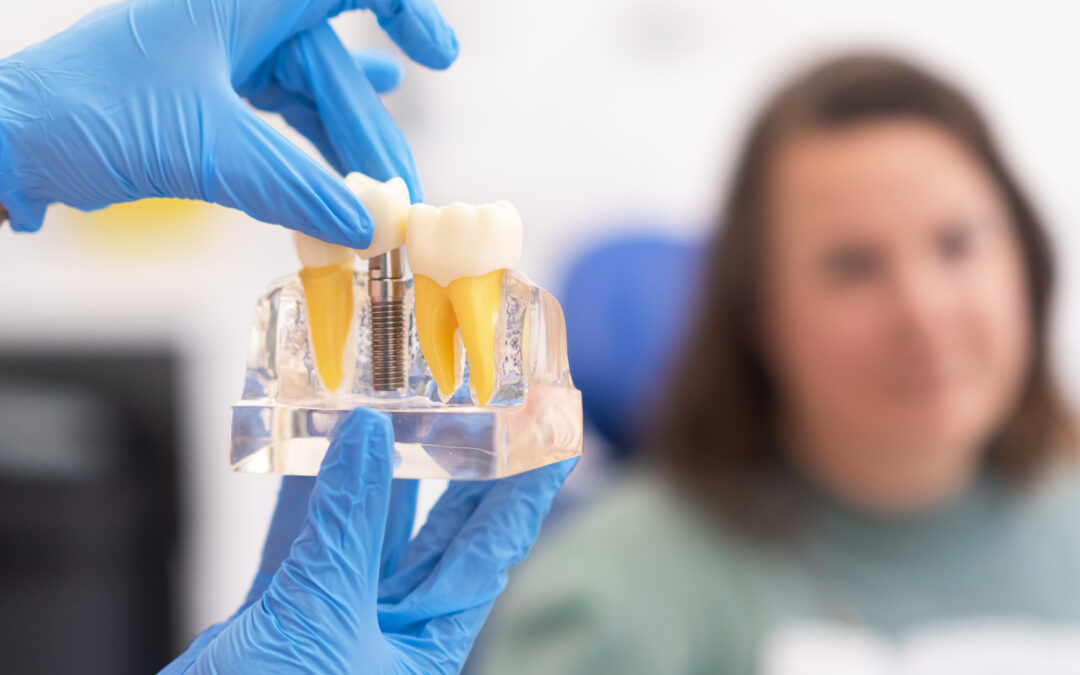
A tooth implant is a small titanium post surgically placed into the jawbone to act as an artificial tooth root. Once the post fuses with the bone through a natural process called osseointegration, a custom-crafted crown is secured on top. The result is a replacement that mimics the structure, appearance, and function of a natural tooth from root to tip.
Unlike removable dentures or traditional bridges, an implant-supported crown does not rely on neighboring teeth or adhesives. It stands independently, just like your original tooth did.
Do Implant-Supported Teeth Actually Look Like Natural Teeth?
Yes, and in most cases, it’s nearly impossible to tell the difference. Here’s why:
Custom-Crafted Crowns
The visible crown placed on top of the implant is individually designed for each patient. It is shaped and shaded to blend seamlessly with the surrounding teeth. The color, size, and contour are all matched to your natural smile, so the replacement tooth looks like it has always belonged there.
Natural Gum-Line Integration
A well-placed implant crown emerges naturally from the gum line, just like a real tooth. There are no visible metal clasps, no gaps, and no unnatural borders. This gives the restoration a lifelike appearance that removable options simply cannot replicate.
Facial Structure Preservation
When a tooth is lost, the jawbone in that area begins to shrink over time. This bone loss can cause a sunken or aged appearance in the face. Because implants stimulate the jawbone the same way natural roots do, they help preserve your facial structure and keep you looking your natural self.
So, Do They Actually Feel Like Real Teeth?
Yes, they feel like real teeth. Once healing is complete and the implant has fully integrated with the jawbone, most patients describe the sensation as remarkably natural. The implant is anchored firmly in the bone, so there is no slipping, clicking, or shifting. Biting and chewing feel stable and secure. Most patients report that after a short adjustment period, they completely forget the implant is there.
The one difference worth noting: natural teeth have a tiny structure called the periodontal ligament that connects the tooth root to the bone. This ligament gives natural teeth a very slight “spring” when you bite. Implants do not have this ligament, so some patients notice they feel slightly more rigid. However, this distinction is minor, and the vast majority of patients find that it has no meaningful impact on their everyday comfort or function.
Implant-supported teeth look natural, feel stable, and function like your original teeth in virtually every way that matters.
Are you looking for dental implants in Anderson or nearby locations? Call our office today to schedule your personal consultation with Dr. Pray.
How the Implant Process Works
Understanding the step-by-step process helps set realistic expectations and eases anxiety for many patients. Here is what you can generally expect:
- Comprehensive Consultation: Dr. Pray evaluates your oral health, jawbone density, and overall suitability for the procedure. This includes digital imaging to plan precise placement.
- Implant Placement: The titanium post is carefully placed into the jawbone under local anesthesia. The procedure is far more comfortable than many patients expect.
- Healing and Osseointegration: Over several months, the jawbone fuses with the implant post. This creates an incredibly stable foundation.
- Abutment Placement: Once healed, a small connector piece (the abutment) is attached to the implant post.
- Crown Placement: A custom crown, crafted to match your natural teeth in size, shape, and shade, is securely fitted on top. This is your final, permanent tooth.
The full timeline typically spans a few months, but the end result is a lasting restoration that can serve you well for many years with proper care.
Key Benefits of Choosing Implant-Supported Tooth Replacement
- Looks completely natural: Blends with surrounding teeth in color, shape, and size.
- Feels stable and secure: No slipping, no adhesives, and no discomfort during eating or speaking.
- Preserves jawbone health: Stimulates the bone and prevents deterioration.
- Protects neighboring teeth: Does not require grinding down adjacent teeth for support, unlike bridges.
- Easy to maintain: Brush and floss just like natural teeth, no special cleaning solutions needed.
- Long-lasting: With good oral hygiene and regular checkups, implant restorations are designed to last.
How to Care for Your Implant-Supported Restoration
Caring for implant restorations requires no extraordinary effort. Follow these straightforward steps:
- Brush twice daily with a soft-bristled toothbrush and fluoride toothpaste.
- Floss daily around the implant using regular floss or an interdental brush.
- Visit your dental care provider for routine cleanings and checkups.
- Avoid using your teeth as tools to crack nuts, open packaging, or bite hard objects.
- If you grind your teeth at night, ask about a custom nightguard to protect your restoration.
Good daily habits are all it takes to keep your implant restoration looking and functioning beautifully for the long term.
Are You a Good Candidate?
Most adults in good general health who have one or more missing teeth are strong candidates. Ideal candidates have sufficient jawbone density to support the implant post and healthy gum tissue. If some bone loss has already occurred, bone grafting may be recommended before placement to ensure the best outcome.
Conditions like uncontrolled diabetes or active gum disease may need to be addressed first, but they do not automatically disqualify someone. A thorough evaluation with your dentist in Anderson will determine the best path forward for your unique situation.
Your Natural-Looking Smile Starts Right Here in Anderson
If you have been wondering whether a replacement tooth can truly look and feel like the real thing, the answer is yes. Modern implant-supported restorations are designed with remarkable precision to match your natural teeth in appearance, function, and feel. Once healed, most patients cannot imagine life without them.
At Pray Family Dentistry, Dr. Matthew A. Pray and his team are committed to helping every patient in Anderson and the surrounding areas, from Clemson to Belton and beyond, to achieve a smile that feels completely their own. Whether you’re enjoying a BBQ at Lake Hartwell, cheering on the Tigers, or simply sharing a meal with family, you deserve a smile that keeps up with your life.
Take the First Step Today. Call our office to schedule your implant consultation with Dr. Pray. A confident, natural-looking smile is closer than you think.
Frequently Asked Questions
1. How long does it take for a tooth implant to feel completely normal?
Most patients report that their implant begins to feel completely natural within a few weeks to a couple of months after the final crown is placed. Once the implant integrates with the jawbone and you adjust to chewing with the new restoration, the difference from a natural tooth becomes nearly unnoticeable.
2. Will the crown on my implant match my other teeth?
Yes. The crown is custom-made using impressions and color-matching techniques to closely replicate the shade, size, and shape of your surrounding teeth. The goal is a restoration that blends in so well that others cannot tell it apart from your natural smile.
3. Can I eat all my favorite foods after getting an implant?
Once fully healed, implant-supported crowns function much like natural teeth. Most patients return to enjoying their full diet, including the hearty Southern meals and crunchy foods they love. The dentist will guide you on what to eat during the healing phase, which involves softer foods temporarily.
4. How long do implant-supported restorations last?
With proper oral hygiene and regular professional checkups, the implant post can last many years. The crown on top may eventually need replacement due to normal wear, but the implant foundation is built to be durable and long-lasting.
5. Is the implant procedure painful?
The procedure is performed under local anesthesia, so most patients feel little to no pain during placement. Some soreness and mild swelling in the days following surgery are normal and manageable with over-the-counter pain relievers. Many patients are pleasantly surprised by how straightforward the experience is.
6. What happens if I don’t replace a missing tooth?
Leaving a gap untreated can lead to neighboring teeth shifting, changes in bite alignment, jawbone deterioration, and difficulty chewing or speaking. Addressing a missing tooth sooner rather than later protects the overall health and structure of your mouth.